Treatment Guide
Juvelook in Korea: Skin Booster Guide for Foreign Patients
A practical guide to Juvelook in Korea, including what it is, who it may suit, how it compares with Rejuran, downtime, cost, and what to ask before booking.
What is Juvelook?
+
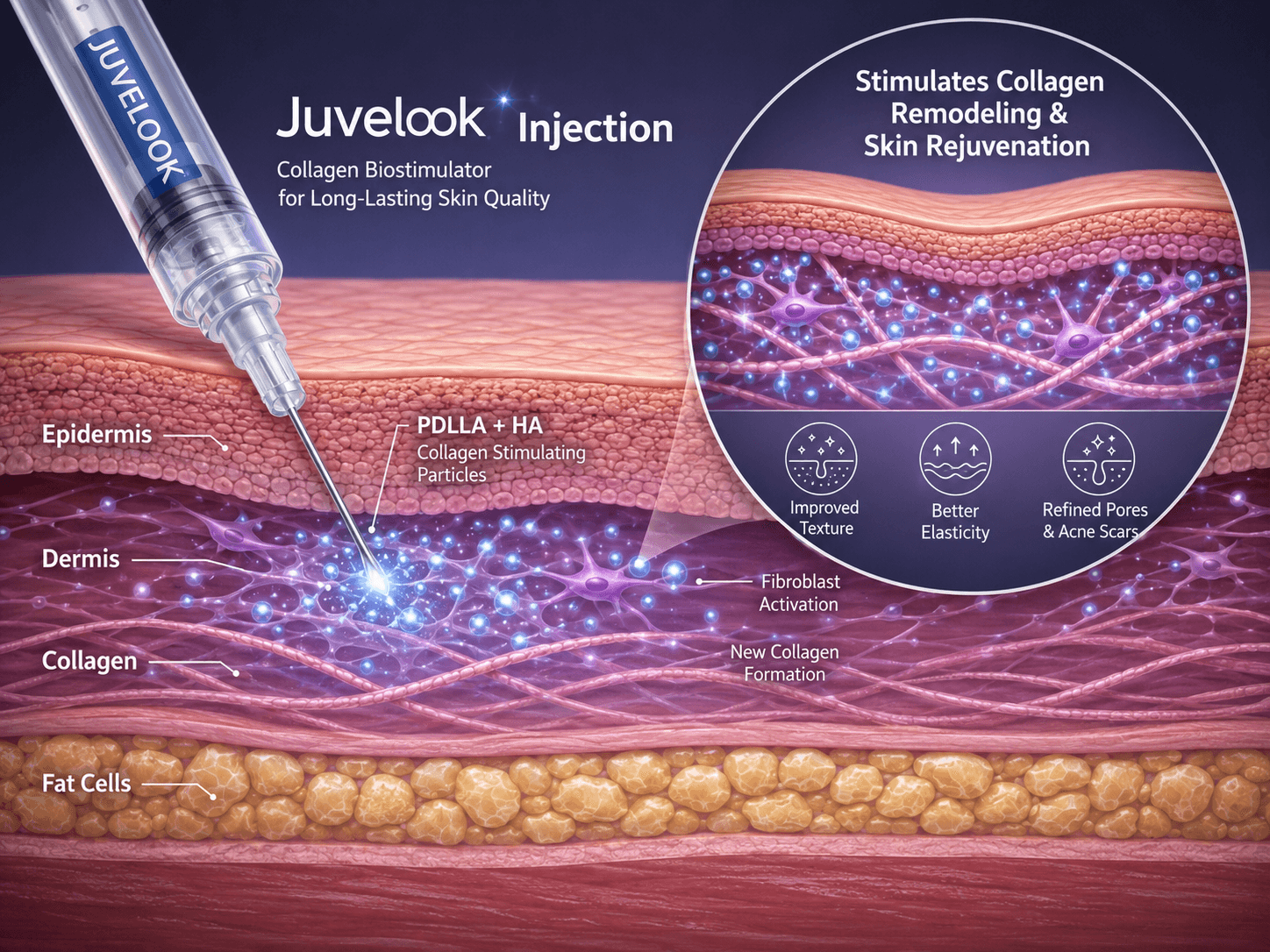
Juvelook is one of the most talked-about injectable skin treatments in Korea, especially among patients looking for skin quality improvement rather than dramatic facial volume. It is commonly described as a collagen-stimulating skin booster because it combines PDLLA, a collagen-stimulating ingredient, with hyaluronic acid, which is often used for hydration and skin support.
Unlike traditional dermal fillers, Juvelook is not usually chosen to make the face look fuller or to create a strong contouring effect. Instead, Korean clinics often use it for concerns such as uneven texture, enlarged pores, fine lines, mild acne scars, and skin that looks tired or less firm than before.
Many foreign patients first discover Juvelook while researching Rejuran, skin boosters, or acne scar treatments in Korea. The names can be confusing because clinics sometimes group these treatments under similar categories. However, Juvelook has its own purpose and should be understood as a gradual skin-quality treatment rather than a quick facial reshaping procedure.
Who is Juvelook best for?
+
Juvelook may be worth considering if your main concerns are rough skin texture, visible pores, shallow acne scars, early fine lines, or general loss of skin firmness. It is often chosen by patients who want their skin to look smoother and healthier over time without making an obvious change to their facial shape.
In Korea, Juvelook is commonly discussed with patients in their late twenties, thirties, and beyond who are starting to notice early aging changes. It may also be recommended to people who have acne scar texture or enlarged pores but do not want a more aggressive laser treatment right away.
That said, Juvelook is not the best answer for every concern. If you have deep acne scars, severe sagging, significant volume loss, or strong pigmentation, your clinic may recommend a different treatment or a combination plan. A good consultation should begin with your skin concern, not with a fixed treatment name.
Juvelook vs Rejuran
+
Juvelook and Rejuran are often compared because both are popular injectable skin treatments in Korea. They are both used for skin quality, but they are not the same treatment. Rejuran is generally known as a polynucleotide-based treatment, while Juvelook is based on PDLLA and hyaluronic acid.
In simple terms, Rejuran is often discussed for skin recovery, hydration, sensitivity, and barrier support. Juvelook is more often discussed for collagen stimulation, pores, fine lines, mild acne-scar texture, and firmness. This does not mean one is always better than the other. The better option depends on your skin condition and treatment goal.
Some clinics may recommend Rejuran for patients with thin, sensitive, or damaged skin. Others may recommend Juvelook when the concern is texture, pores, or early skin laxity. Some patients may even receive both treatments in different sessions. For foreign patients, the most important question is not which treatment is more popular, but why a clinic is recommending one over the other for your specific skin.
Treatment process, pain, and downtime
+
A typical Juvelook appointment in Korea usually starts with consultation, skin assessment, cleansing, and numbing cream. After numbing, the product is injected into selected areas depending on the treatment plan. Some clinics focus on the cheeks and pores, while others may treat under-eye areas, acne scar zones, or fine-line areas.
Because Juvelook is an injectable treatment, some discomfort is expected even with numbing cream. Pain level depends on the area, injection depth, product amount, and your personal sensitivity. Under-eye areas and acne scar areas may feel more sensitive than broader cheek areas.
Downtime can include small bumps, redness, swelling, tenderness, bruising, or visible injection marks. These reactions are usually temporary, but the exact recovery time varies from person to person. If you are visiting Korea for travel, avoid booking Juvelook right before important photos, events, or flights where you want to look fully recovered.
After treatment, clinics may recommend avoiding alcohol, sauna, intense exercise, strong exfoliating skincare, and heavy makeup for a short period. Always follow the clinic’s own aftercare instructions because injection method and treatment intensity can vary.
How many sessions are needed?
+
Juvelook is usually planned as a series rather than a one-time miracle treatment. Some patients may notice improvement after one session, but collagen-related changes are generally gradual. Many clinics recommend multiple sessions spaced several weeks apart, especially for pores, texture, and acne scar concerns.
The number of sessions depends on your skin condition, age, treatment area, and goal. Someone with mild texture concerns may need a different plan from someone with acne scars or more visible skin laxity. It is better to ask for a realistic treatment plan than to expect one session to solve everything.
If you are only in Korea for a short trip, ask the clinic whether one session is worthwhile for your case. A single session may still be helpful for some patients, but you should understand what kind of result is realistic from one visit and whether follow-up treatment in your home country is needed.
How much does Juvelook cost in Korea?
+
Juvelook prices in Korea can vary widely depending on the clinic, treatment area, product amount, doctor involvement, and whether the treatment is combined with other procedures. Some clinics advertise lower starting prices, but the final cost may change after consultation depending on how much product is needed.
Foreign patients should be careful when comparing prices online. A low advertised price may apply only to a small area, a limited amount, or a promotional package. It may not include consultation, numbing, aftercare, tax, or additional treatment fees. Always ask what is included before booking.
It is also important to distinguish between standard Juvelook and Juvelook Volume. Clinics may use similar names, but the treatment purpose and pricing can be different. Standard Juvelook is usually discussed for skin quality, while Juvelook Volume may be used for deeper volume-related concerns.
The safest way to compare clinics is not to choose the cheapest option immediately. Instead, compare the treatment area, product amount, who performs the injection, aftercare support, English communication, and whether the clinic clearly explains why Juvelook is appropriate for your skin.
What should foreigners ask before booking?
+
Before booking Juvelook in Korea, ask which exact product will be used, how much will be injected, which areas will be treated, and whether the procedure will be performed by a doctor. These questions are especially important if you are comparing several clinics with different prices.
You should also ask about downtime. If you are traveling, tell the clinic your schedule, flight date, and any important plans. A good clinic should help you decide whether the timing is reasonable instead of pushing treatment without considering your trip.
Ask whether English support is available before, during, and after the treatment. For injectable procedures, communication matters. You should be able to explain your concerns clearly and understand aftercare instructions without guessing.
Finally, ask what kind of result is realistic. Juvelook may help with skin texture, pores, fine lines, and firmness, but it should not be sold as a guaranteed cure for acne scars or aging. A trustworthy clinic will explain both the potential benefits and the limitations.
What is Juvelook?
Juvelook is one of the most talked-about injectable skin treatments in Korea, especially among patients looking for skin quality improvement rather than dramatic facial volume. It is commonly described as a collagen-stimulating skin booster because it combines PDLLA, a collagen-stimulating ingredient, with hyaluronic acid, which is often used for hydration and skin support.
Unlike traditional dermal fillers, Juvelook is not usually chosen to make the face look fuller or to create a strong contouring effect. Instead, Korean clinics often use it for concerns such as uneven texture, enlarged pores, fine lines, mild acne scars, and skin that looks tired or less firm than before.
Many foreign patients first discover Juvelook while researching Rejuran, skin boosters, or acne scar treatments in Korea. The names can be confusing because clinics sometimes group these treatments under similar categories. However, Juvelook has its own purpose and should be understood as a gradual skin-quality treatment rather than a quick facial reshaping procedure.
Who is Juvelook best for?
Juvelook may be worth considering if your main concerns are rough skin texture, visible pores, shallow acne scars, early fine lines, or general loss of skin firmness. It is often chosen by patients who want their skin to look smoother and healthier over time without making an obvious change to their facial shape.
In Korea, Juvelook is commonly discussed with patients in their late twenties, thirties, and beyond who are starting to notice early aging changes. It may also be recommended to people who have acne scar texture or enlarged pores but do not want a more aggressive laser treatment right away.
That said, Juvelook is not the best answer for every concern. If you have deep acne scars, severe sagging, significant volume loss, or strong pigmentation, your clinic may recommend a different treatment or a combination plan. A good consultation should begin with your skin concern, not with a fixed treatment name.
Juvelook vs Rejuran
Juvelook and Rejuran are often compared because both are popular injectable skin treatments in Korea. They are both used for skin quality, but they are not the same treatment. Rejuran is generally known as a polynucleotide-based treatment, while Juvelook is based on PDLLA and hyaluronic acid.
In simple terms, Rejuran is often discussed for skin recovery, hydration, sensitivity, and barrier support. Juvelook is more often discussed for collagen stimulation, pores, fine lines, mild acne-scar texture, and firmness. This does not mean one is always better than the other. The better option depends on your skin condition and treatment goal.
Some clinics may recommend Rejuran for patients with thin, sensitive, or damaged skin. Others may recommend Juvelook when the concern is texture, pores, or early skin laxity. Some patients may even receive both treatments in different sessions. For foreign patients, the most important question is not which treatment is more popular, but why a clinic is recommending one over the other for your specific skin.
Treatment process, pain, and downtime
A typical Juvelook appointment in Korea usually starts with consultation, skin assessment, cleansing, and numbing cream. After numbing, the product is injected into selected areas depending on the treatment plan. Some clinics focus on the cheeks and pores, while others may treat under-eye areas, acne scar zones, or fine-line areas.
Because Juvelook is an injectable treatment, some discomfort is expected even with numbing cream. Pain level depends on the area, injection depth, product amount, and your personal sensitivity. Under-eye areas and acne scar areas may feel more sensitive than broader cheek areas.
Downtime can include small bumps, redness, swelling, tenderness, bruising, or visible injection marks. These reactions are usually temporary, but the exact recovery time varies from person to person. If you are visiting Korea for travel, avoid booking Juvelook right before important photos, events, or flights where you want to look fully recovered.
After treatment, clinics may recommend avoiding alcohol, sauna, intense exercise, strong exfoliating skincare, and heavy makeup for a short period. Always follow the clinic’s own aftercare instructions because injection method and treatment intensity can vary.
How many sessions are needed?
Juvelook is usually planned as a series rather than a one-time miracle treatment. Some patients may notice improvement after one session, but collagen-related changes are generally gradual. Many clinics recommend multiple sessions spaced several weeks apart, especially for pores, texture, and acne scar concerns.
The number of sessions depends on your skin condition, age, treatment area, and goal. Someone with mild texture concerns may need a different plan from someone with acne scars or more visible skin laxity. It is better to ask for a realistic treatment plan than to expect one session to solve everything.
If you are only in Korea for a short trip, ask the clinic whether one session is worthwhile for your case. A single session may still be helpful for some patients, but you should understand what kind of result is realistic from one visit and whether follow-up treatment in your home country is needed.
How much does Juvelook cost in Korea?
Juvelook prices in Korea can vary widely depending on the clinic, treatment area, product amount, doctor involvement, and whether the treatment is combined with other procedures. Some clinics advertise lower starting prices, but the final cost may change after consultation depending on how much product is needed.
Foreign patients should be careful when comparing prices online. A low advertised price may apply only to a small area, a limited amount, or a promotional package. It may not include consultation, numbing, aftercare, tax, or additional treatment fees. Always ask what is included before booking.
It is also important to distinguish between standard Juvelook and Juvelook Volume. Clinics may use similar names, but the treatment purpose and pricing can be different. Standard Juvelook is usually discussed for skin quality, while Juvelook Volume may be used for deeper volume-related concerns.
The safest way to compare clinics is not to choose the cheapest option immediately. Instead, compare the treatment area, product amount, who performs the injection, aftercare support, English communication, and whether the clinic clearly explains why Juvelook is appropriate for your skin.
What should foreigners ask before booking?
Before booking Juvelook in Korea, ask which exact product will be used, how much will be injected, which areas will be treated, and whether the procedure will be performed by a doctor. These questions are especially important if you are comparing several clinics with different prices.
You should also ask about downtime. If you are traveling, tell the clinic your schedule, flight date, and any important plans. A good clinic should help you decide whether the timing is reasonable instead of pushing treatment without considering your trip.
Ask whether English support is available before, during, and after the treatment. For injectable procedures, communication matters. You should be able to explain your concerns clearly and understand aftercare instructions without guessing.
Finally, ask what kind of result is realistic. Juvelook may help with skin texture, pores, fine lines, and firmness, but it should not be sold as a guaranteed cure for acne scars or aging. A trustworthy clinic will explain both the potential benefits and the limitations.
Need help choosing a clinic?
Tell us your treatment goals and travel schedule. KSkinPick can help you compare suitable Korean skin clinic options.
Free ConsultationFAQ
Is Juvelook the same as Rejuran?
+
No. Juvelook and Rejuran are different injectable skin treatments. Rejuran is generally known as a polynucleotide-based treatment, while Juvelook combines PDLLA and hyaluronic acid. The better option depends on your skin condition and treatment goal.
Is Juvelook good for acne scars?
+
Juvelook may be considered for mild acne scar texture or shallow depressions, but deep acne scars often need combination treatment. A clinic should assess the scar type before recommending Juvelook alone.
How much downtime does Juvelook have?
+
Downtime can include redness, swelling, small bumps, bruising, tenderness, or injection marks. Recovery varies by person, treatment area, injection method, and product amount.
How many Juvelook sessions do I need?
+
Many clinics recommend multiple sessions for gradual skin-quality improvement. The number of sessions depends on your skin condition, treatment goal, and whether Juvelook is combined with other procedures.
Can foreigners get Juvelook in Korea?
+
Yes. Many Korean aesthetic clinics treat foreign patients, but you should check English support, consultation quality, aftercare instructions, and whether the clinic clearly explains the treatment plan.
Is Juvelook a filler?
+
Juvelook is usually discussed as a collagen-stimulating skin booster rather than a traditional filler. It is generally used for skin quality concerns rather than dramatic facial volume or contour changes.
Is Juvelook the same as Rejuran?
No. Juvelook and Rejuran are different injectable skin treatments. Rejuran is generally known as a polynucleotide-based treatment, while Juvelook combines PDLLA and hyaluronic acid. The better option depends on your skin condition and treatment goal.
Is Juvelook good for acne scars?
Juvelook may be considered for mild acne scar texture or shallow depressions, but deep acne scars often need combination treatment. A clinic should assess the scar type before recommending Juvelook alone.
How much downtime does Juvelook have?
Downtime can include redness, swelling, small bumps, bruising, tenderness, or injection marks. Recovery varies by person, treatment area, injection method, and product amount.
How many Juvelook sessions do I need?
Many clinics recommend multiple sessions for gradual skin-quality improvement. The number of sessions depends on your skin condition, treatment goal, and whether Juvelook is combined with other procedures.
Can foreigners get Juvelook in Korea?
Yes. Many Korean aesthetic clinics treat foreign patients, but you should check English support, consultation quality, aftercare instructions, and whether the clinic clearly explains the treatment plan.
Is Juvelook a filler?
Juvelook is usually discussed as a collagen-stimulating skin booster rather than a traditional filler. It is generally used for skin quality concerns rather than dramatic facial volume or contour changes.