Treatment Guide
Skin Boosters in Korea: Rejuran, Juvelook, Exosomes and More
A practical guide to Korean skin boosters, including Rejuran, Juvelook, exosomes, Chanel injection, expected cost, downtime, and how to choose the right option.
What are skin boosters in Korea?
+
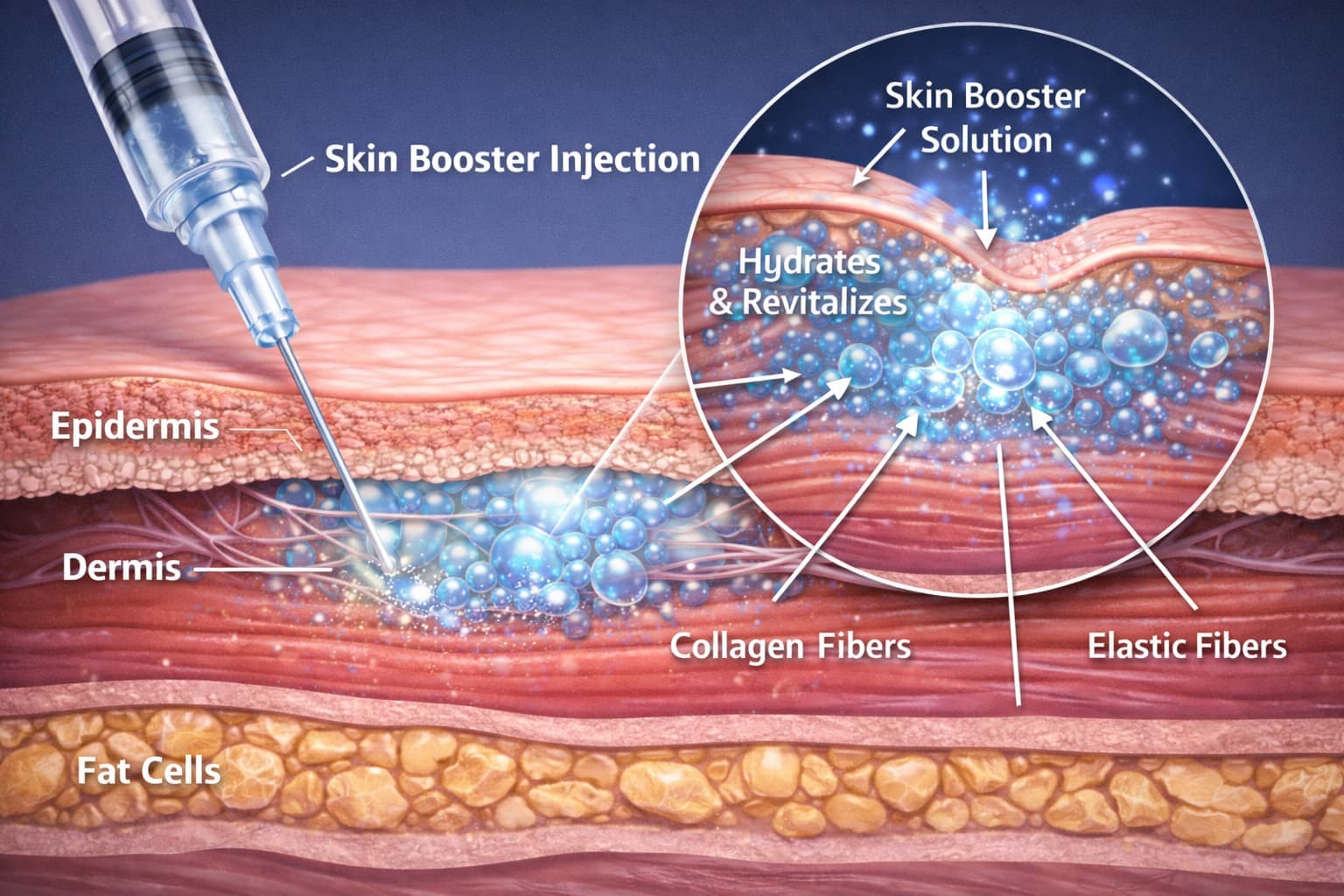
Skin boosters are injectable or clinic-based treatments designed to improve skin quality rather than change facial shape. In Korea, the term can include treatments such as Rejuran, Juvelook, exosomes, Chanel injection, hyaluronic acid boosters, and other customized clinic protocols.
Unlike fillers, skin boosters are usually not used to create strong volume or reshape the face. They are more commonly discussed for hydration, texture, pores, fine lines, dullness, and overall skin condition.
For foreign patients, the confusing part is that different clinics may use the word “skin booster” differently. One clinic may mean Rejuran, another may mean Juvelook, and another may recommend a cocktail-style booster. Always ask what product is being used and why it suits your skin.
Popular types of Korean skin boosters
+
Rejuran is one of the best-known Korean skin boosters and is often discussed for skin recovery, hydration, sensitivity, and overall skin condition. It is especially popular among patients looking for gradual improvement rather than an obvious cosmetic change.
Juvelook is often described as a collagen-stimulating skin booster. It is commonly considered for pores, texture, fine lines, mild acne scar texture, and firmness. Some clinics may recommend Juvelook when the patient wants more collagen-focused improvement.
Exosome treatments are often positioned as regenerative or recovery-focused skin treatments. Chanel injection and similar booster cocktails are usually discussed for glow, hydration, and skin freshness. The exact formula and effect can vary by clinic, so the name alone is not enough to compare treatments.
Who are skin boosters best for?
+
Skin boosters may be suitable for people who feel their skin looks dry, dull, rough, tired, or less elastic than before. They are also commonly considered for enlarged pores, fine lines, mild texture issues, and skin that does not respond enough to skincare products alone.
They may be a good option for patients who want subtle improvement rather than a dramatic change. Many foreign visitors choose skin boosters because they fit well with Korea’s natural-looking aesthetic trend.
However, skin boosters are not the best solution for every concern. Deep acne scars, severe sagging, strong pigmentation, or significant facial volume loss may require lasers, RF microneedling, lifting devices, fillers, or combination treatment instead.
Skin booster cost in Korea
+
Skin booster prices in Korea vary depending on the product, amount, treatment area, clinic location, doctor involvement, and whether the treatment is part of a package. As a general 2026 reference, many basic skin booster treatments in Seoul are advertised around ₩150,000 to ₩350,000, while premium products or combination plans may cost more.
Rejuran and Juvelook are often priced by product amount, session, or treatment area. Exosome and cocktail-style boosters can vary even more because clinics may use different formulas or combine them with microneedling, laser, or RF treatments.
When comparing prices, do not look only at the headline number. Ask whether the price includes consultation, numbing cream, VAT, aftercare, product amount, and whether the procedure is performed by a doctor. A cheaper price may not mean the same treatment.
Downtime and treatment schedule
+
Downtime depends on the product and injection method. Common reactions may include redness, small bumps, swelling, bruising, tenderness, or visible injection marks. Some patients look normal within a day or two, while others may need several days.
Skin boosters are often done as a series. Some patients try one session during a Korea trip, but many clinics recommend two to four sessions for more noticeable skin-quality improvement.
If you are visiting Korea for a short trip, avoid scheduling skin boosters right before an important event, photoshoot, or flight. Give your skin some recovery time and ask the clinic whether your travel schedule is realistic.
How to choose the right skin booster
+
The best skin booster depends on your main concern. If your skin is sensitive and dry, the clinic may suggest a different option than if your main issue is pores or acne scar texture. If your concern is pigmentation, a booster alone may not be enough.
Ask the clinic to explain the difference between the products they offer. A good consultation should compare options clearly instead of simply recommending the most expensive or most popular treatment.
For foreign patients, English support is also important. You should understand what is being injected, how much is used, what downtime to expect, and what aftercare instructions to follow.
What to ask before booking
+
Before booking a skin booster in Korea, ask the clinic which exact product will be used, how many cc or vials are included, which areas will be treated, and whether numbing and aftercare are included.
You should also ask how many sessions are recommended and whether one session is worthwhile for your trip. If a clinic gives the same answer to every patient without looking at your skin, that is not a good sign.
Skin boosters can be helpful, but they should not be presented as a guaranteed fix for every skin problem. A trustworthy clinic will explain both the expected benefits and the limitations.
What are skin boosters in Korea?
Skin boosters are injectable or clinic-based treatments designed to improve skin quality rather than change facial shape. In Korea, the term can include treatments such as Rejuran, Juvelook, exosomes, Chanel injection, hyaluronic acid boosters, and other customized clinic protocols.
Unlike fillers, skin boosters are usually not used to create strong volume or reshape the face. They are more commonly discussed for hydration, texture, pores, fine lines, dullness, and overall skin condition.
For foreign patients, the confusing part is that different clinics may use the word “skin booster” differently. One clinic may mean Rejuran, another may mean Juvelook, and another may recommend a cocktail-style booster. Always ask what product is being used and why it suits your skin.
Popular types of Korean skin boosters
Rejuran is one of the best-known Korean skin boosters and is often discussed for skin recovery, hydration, sensitivity, and overall skin condition. It is especially popular among patients looking for gradual improvement rather than an obvious cosmetic change.
Juvelook is often described as a collagen-stimulating skin booster. It is commonly considered for pores, texture, fine lines, mild acne scar texture, and firmness. Some clinics may recommend Juvelook when the patient wants more collagen-focused improvement.
Exosome treatments are often positioned as regenerative or recovery-focused skin treatments. Chanel injection and similar booster cocktails are usually discussed for glow, hydration, and skin freshness. The exact formula and effect can vary by clinic, so the name alone is not enough to compare treatments.
Who are skin boosters best for?
Skin boosters may be suitable for people who feel their skin looks dry, dull, rough, tired, or less elastic than before. They are also commonly considered for enlarged pores, fine lines, mild texture issues, and skin that does not respond enough to skincare products alone.
They may be a good option for patients who want subtle improvement rather than a dramatic change. Many foreign visitors choose skin boosters because they fit well with Korea’s natural-looking aesthetic trend.
However, skin boosters are not the best solution for every concern. Deep acne scars, severe sagging, strong pigmentation, or significant facial volume loss may require lasers, RF microneedling, lifting devices, fillers, or combination treatment instead.
Skin booster cost in Korea
Skin booster prices in Korea vary depending on the product, amount, treatment area, clinic location, doctor involvement, and whether the treatment is part of a package. As a general 2026 reference, many basic skin booster treatments in Seoul are advertised around ₩150,000 to ₩350,000, while premium products or combination plans may cost more.
Rejuran and Juvelook are often priced by product amount, session, or treatment area. Exosome and cocktail-style boosters can vary even more because clinics may use different formulas or combine them with microneedling, laser, or RF treatments.
When comparing prices, do not look only at the headline number. Ask whether the price includes consultation, numbing cream, VAT, aftercare, product amount, and whether the procedure is performed by a doctor. A cheaper price may not mean the same treatment.
Downtime and treatment schedule
Downtime depends on the product and injection method. Common reactions may include redness, small bumps, swelling, bruising, tenderness, or visible injection marks. Some patients look normal within a day or two, while others may need several days.
Skin boosters are often done as a series. Some patients try one session during a Korea trip, but many clinics recommend two to four sessions for more noticeable skin-quality improvement.
If you are visiting Korea for a short trip, avoid scheduling skin boosters right before an important event, photoshoot, or flight. Give your skin some recovery time and ask the clinic whether your travel schedule is realistic.
How to choose the right skin booster
The best skin booster depends on your main concern. If your skin is sensitive and dry, the clinic may suggest a different option than if your main issue is pores or acne scar texture. If your concern is pigmentation, a booster alone may not be enough.
Ask the clinic to explain the difference between the products they offer. A good consultation should compare options clearly instead of simply recommending the most expensive or most popular treatment.
For foreign patients, English support is also important. You should understand what is being injected, how much is used, what downtime to expect, and what aftercare instructions to follow.
What to ask before booking
Before booking a skin booster in Korea, ask the clinic which exact product will be used, how many cc or vials are included, which areas will be treated, and whether numbing and aftercare are included.
You should also ask how many sessions are recommended and whether one session is worthwhile for your trip. If a clinic gives the same answer to every patient without looking at your skin, that is not a good sign.
Skin boosters can be helpful, but they should not be presented as a guaranteed fix for every skin problem. A trustworthy clinic will explain both the expected benefits and the limitations.
Need help choosing a clinic?
Tell us your treatment goals and travel schedule. KSkinPick can help you compare suitable Korean skin clinic options.
Free ConsultationFAQ
How much do skin boosters cost in Korea?
+
Many skin booster treatments in Seoul are advertised around ₩150,000 to ₩350,000, but premium products or combination plans can cost more. Final pricing depends on product, amount, area, and clinic policy.
Are Korean skin boosters the same as fillers?
+
No. Skin boosters are usually used for skin quality, hydration, texture, pores, and fine lines. Fillers are more commonly used for volume or contouring.
Which skin booster is best in Korea?
+
There is no single best option for everyone. Rejuran, Juvelook, exosomes, and other boosters may suit different concerns, skin types, and budgets.
How many sessions do I need?
+
Many clinics recommend multiple sessions, often two to four, depending on the product and concern. One session may still be useful for some visitors, but expectations should be realistic.
How much do skin boosters cost in Korea?
Many skin booster treatments in Seoul are advertised around ₩150,000 to ₩350,000, but premium products or combination plans can cost more. Final pricing depends on product, amount, area, and clinic policy.
Are Korean skin boosters the same as fillers?
No. Skin boosters are usually used for skin quality, hydration, texture, pores, and fine lines. Fillers are more commonly used for volume or contouring.
Which skin booster is best in Korea?
There is no single best option for everyone. Rejuran, Juvelook, exosomes, and other boosters may suit different concerns, skin types, and budgets.
How many sessions do I need?
Many clinics recommend multiple sessions, often two to four, depending on the product and concern. One session may still be useful for some visitors, but expectations should be realistic.