Overview
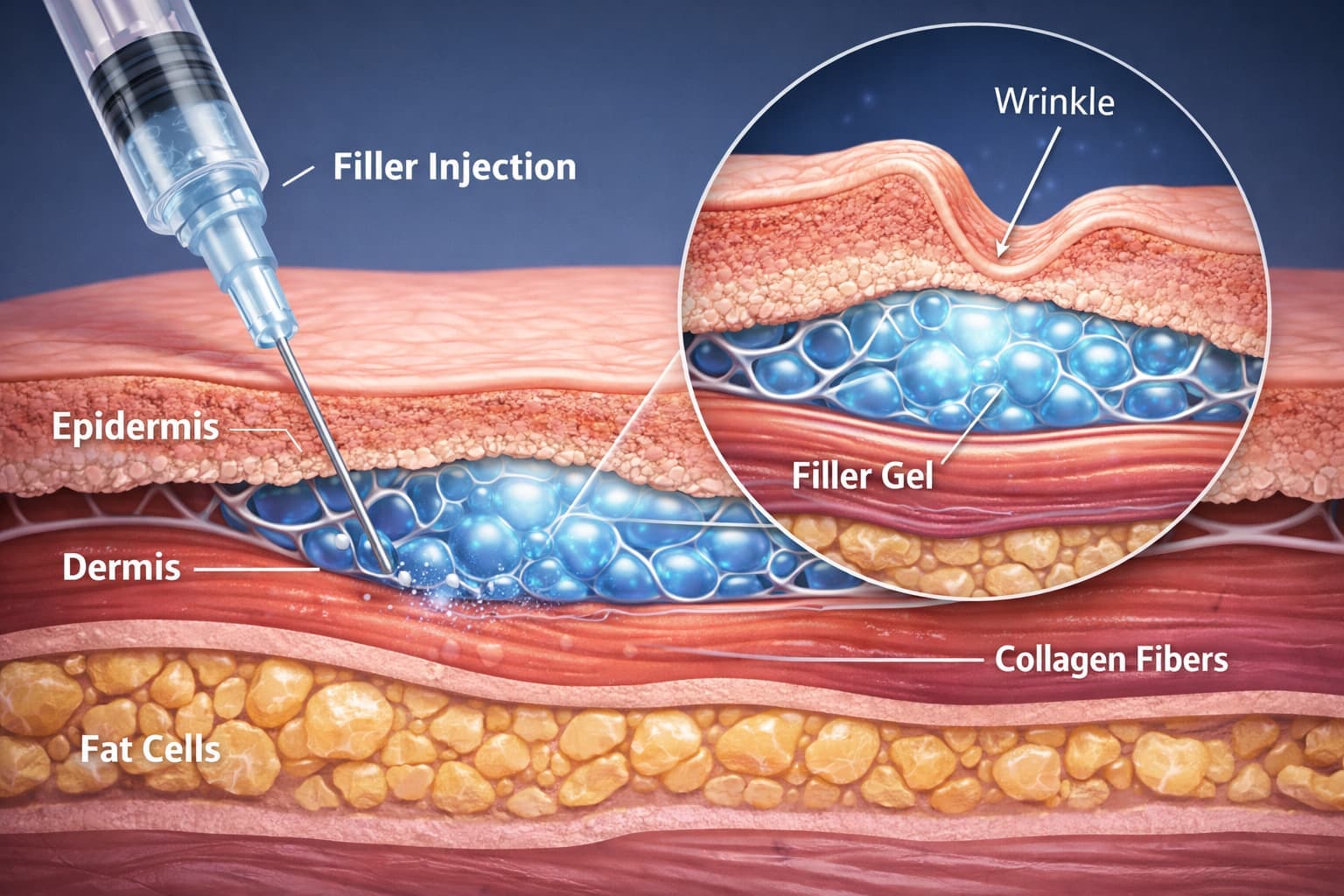
Filler treatments in Korea are commonly used for facial contouring, volume restoration, and feature enhancement. Popular areas include lips, chin, forehead, cheeks, nasolabial folds, temples, and under-eye hollows. The most common fillers are hyaluronic acid-based, but product selection varies by clinic. Injector skill is especially important because the same amount of filler can look very different depending on facial design and technique.
Best for
- Facial volume loss
- Lip volume
- Chin projection
- Forehead contour
- Under-eye hollow concerns
- Non-surgical facial balancing
Not ideal for
- Skin texture concerns only
- Severe sagging
- Patients wanting permanent change
- Unrealistic facial shape goals
- Active infection near the injection area
Benefits
Downtime
Swelling, bruising, tenderness, temporary asymmetry, or lumpiness can occur. Some areas, such as lips and under-eye, may swell more noticeably.
Session plan
Filler is often performed in one session, but touch-up may be discussed after swelling settles. Maintenance depends on product type, area, and metabolism.
Before booking
- Ask the product brand and type.
- Confirm injector experience with your target area.
- Discuss dissolving options for HA filler.
- Ask about vascular risk and safety protocol.
- Avoid overfilling for trend-based facial shapes.
- Check whether follow-up is available.
FAQ
Can filler be dissolved?
Many hyaluronic acid fillers can be dissolved, but this depends on the product and medical evaluation.
Is Korean filler cheaper?
Pricing can be more accessible than in some countries, but product, injector skill, and safety should matter more than price alone.
Does filler hurt?
Pain varies by area. Lips and under-eye areas may feel more sensitive than other regions.